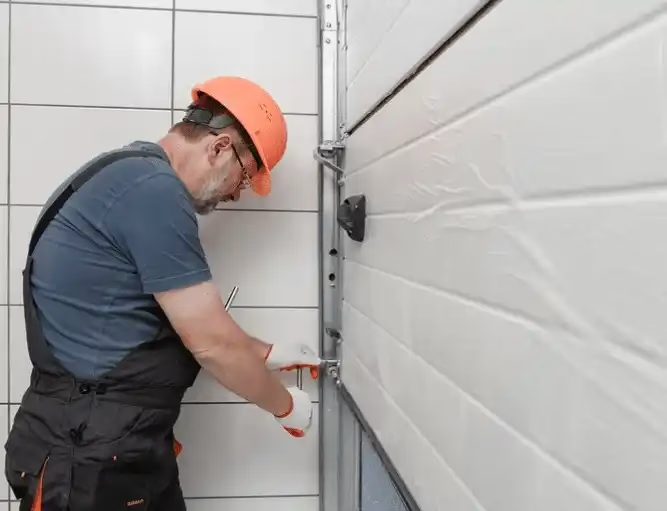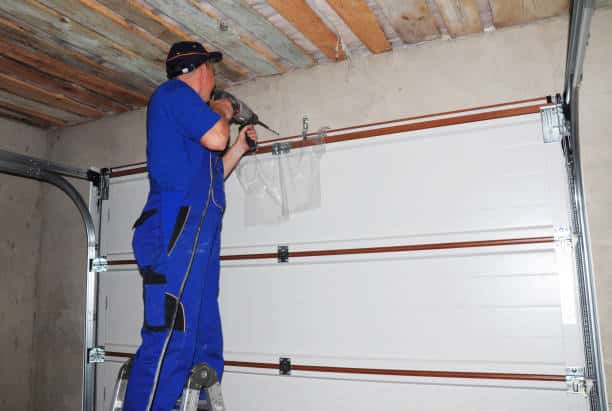

Most homeowners do not think about replacing their garage door until something goes wrong. A spring snaps, a panel gets dented, or the opener stops responding, and suddenly the question is no longer theoretical. Making that decision under pressure, without a clear framework, often leads to either spending money on a door that needed replacing years ago or rushing into a full replacement when a targeted garage door repair would have been the smarter move.
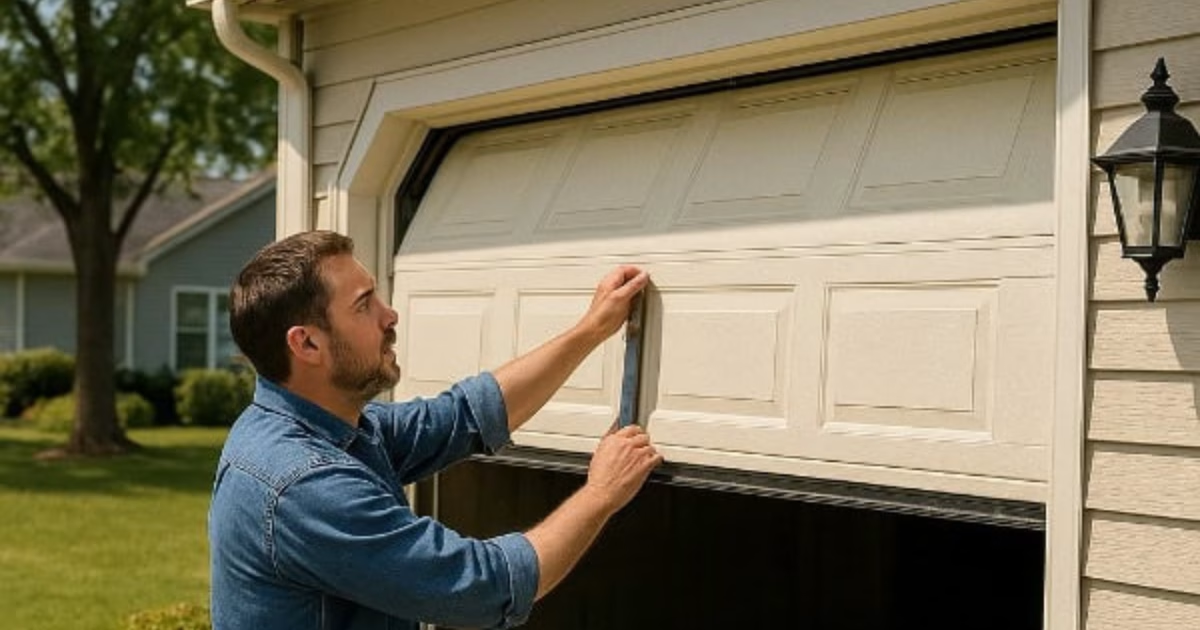
Understand the Difference Between Repair and Replacement
Not every garage door problem points toward full replacement, and not every repair is worth doing on an aging system. Here is how to think about the distinction:
- Repair makes sense when the door is structurally sound, the issue is isolated to a single component, the door is relatively young, and the repair cost is reasonable relative to its remaining useful life.
- Replacement makes more sense when the door is old, the same components keep failing, or multiple systems are deteriorating at the same time.
- Many technicians follow the 50 percent rule. If the repair estimate reaches 50 percent or more of the cost of a new door, replacement is usually the better financial decision.
- A repair on a five-year-old door is a very different proposition than the same repair on a door that is 20 years old with multiple service visits behind it.
- If the door needs replacement and the garage door opener is also aging, replacing both at the same time is often more cost-effective than staggering the work.
If you want a clearer picture of what a full sectional garage door system includes, What Is a Sectional Garage Door? gives you that foundation before you start evaluating repair quotes.
The Door Is More Than 15 to 20 Years Old
Age alone is not a reason to replace a garage door, but it is the most important context for every other decision on this list. Even with consistent garage door maintenance over the years, every door eventually reaches a stage where age becomes the deciding factor rather than any single component failure.
- Most residential sectional garage doors are built to last 15 to 30 years, depending on material, hardware quality, climate, and maintenance history.
- A 15-year-old door that has been well maintained may still have life left, but its springs, cables, rollers, and seals are likely in the later stages of their service life.
- A 15-year-old door with minimal maintenance is probably close to the end of its practical lifespan, regardless of how it looks from the outside.
- Steel doors on the lower end of the quality range show wear sooner, particularly in Denver, where temperature swings and freeze-thaw cycles put consistent stress on materials and hardware.
- At 20 years and beyond, the cost of keeping an aging door running through repeated repairs almost always exceeds the cost of replacement when calculated over a three to five-year horizon.
Before spending on exterior renovations, reading Why Sectional Garage Doors Are a Smart Home Investment can help you prioritize wisely.
Repeated Repairs on the Same Components
One or two service calls over several years is normal. A pattern of recurring repairs on the same components is a clear signal worth paying attention to.
- Springs replaced once are a normal maintenance event. Springs replaced twice within a few years on an older door indicate that the overall tension and balance of the system is deteriorating.
- Rollers that wear out quickly after replacement may point to track alignment issues or a door that is no longer hanging correctly.
- Repeated cable issues often indicate that the drum, spring tension, or overall balance is off in a way that puts abnormal stress on the cables during every cycle.
- An opener that keeps malfunctioning despite service visits is often struggling to compensate for a door that is no longer operating within its designed parameters.
- If you are calling for service more than once per year, ask the technician directly whether the pattern points toward a system that is winding down rather than a series of unrelated failures.
Visible Structural Damage to the Panels
Cosmetic damage like small surface dents does not necessarily require replacement. Structural damage is a different matter entirely.
- Cosmetic damage includes shallow dents that do not affect the panel’s shape or the seal between panels, minor scratches, and small chips in the paint or coating.
- Structural damage includes dents deep enough to distort the panel profile, cracks that run through the panel material, and any damage that affects how panels align or seal at the joints.
- A single damaged panel can sometimes be replaced without replacing the whole door, provided the door model is still in production and matching panels are available.
- If the door model has been discontinued, sourcing a replacement panel becomes difficult and expensive, making full replacement the cleaner solution.
- Multiple damaged panels on an older door push the calculation firmly toward replacement, especially when springs, cables, and seals are also aging.
The Door No Longer Seals Properly
A garage door that does not seal correctly is costing you money and causing ongoing damage, even when nothing is visibly broken.
- Light visible around the edges of the closed door indicates the weatherstripping is no longer making proper contact.
- A bottom seal that leaves gaps even after replacement often points to a warped panel, settled floor, or misaligned door rather than just a worn seal.
- Drafts felt near the bottom or sides on cold days signal a sealing failure that is actively affecting the temperature of the garage and connected living spaces.
- Persistent sealing problems despite multiple seal replacements indicate a structural issue that maintenance alone cannot resolve.
For Denver homeowners, where winter temperatures regularly drop well below freezing, a door that cannot seal properly becomes a significant energy and comfort problem from roughly October through March every year.
Poor sealing and insulation in areas like garages can significantly increase energy use, especially when conditioned air is allowed to escape through gaps and worn materials.
The Door Has Become a Safety Concern
Safety issues with a garage door require immediate action, and in some cases that action is replacement rather than repair.
- A door that does not reverse when it contacts an object during closing has a failed safety mechanism. This is a code-required function and a door that cannot perform it reliably is genuinely dangerous, particularly in households with children or pets.
- A door that has come off the track, dropped unexpectedly, or shown signs of cable failure cannot be trusted to operate predictably.
- Visible cable fraying, broken springs, or a door that feels extremely heavy when lifted manually all indicate the counterbalance system is failing, and the door could fall without warning.
- An opener that runs but does not move the door, or moves it intermittently, may be struggling against a door that is mechanically compromised.
If a door presents any of these safety concerns, have a professional evaluate it before continuing to use it. In many of these situations, replacement is the only way to restore a system that is genuinely safe to operate.
Industry safety standards outlined by Door & Access Systems Manufacturers Association emphasize that modern garage doors must include properly functioning auto-reverse and safety sensor systems to prevent injury.
Energy Costs Have Increased Without an Obvious Cause
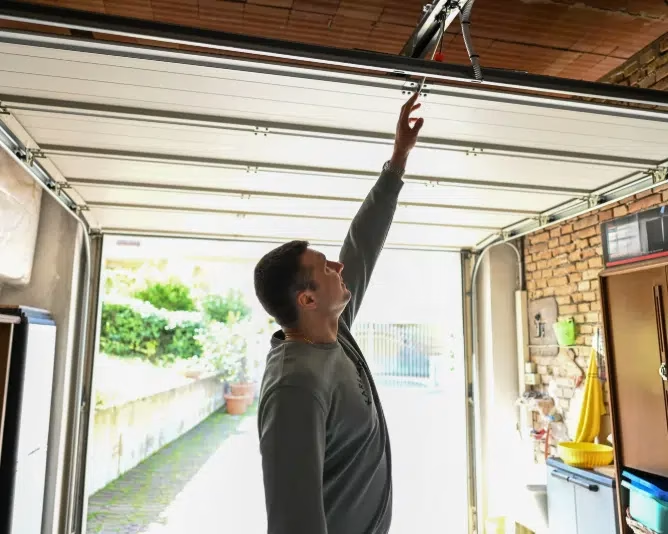
For homes with attached garages, the garage door is one of the first places worth checking when energy bills climb without explanation.
- Single-layer steel doors and older doors with degraded insulation provide very little resistance to heat transfer between the garage and the outdoors.
- In an attached garage, that heat transfer affects every wall, floor, and ceiling the garage shares with the living space, which means the HVAC system works harder to compensate.
- An old door with failed seals and low R-value insulation can be one of the largest sources of thermal loss in an attached garage, particularly during Denver winters.
- Upgrading to a triple-layer polyurethane-insulated door with quality seals can produce a meaningful reduction in heating and cooling costs that accumulates over every billing cycle.
The Opener Is Also Aging
A garage door and its opener are a system, and the condition of the opener is part of the replacement calculation.
- Garage door openers typically last 10 to 15 years under normal residential use. An opener approaching or past that range is a candidate for replacement regardless of whether the door itself is being replaced.
- If the door needs replacement and the opener is also more than ten years old, replacing both at the same time eliminates a second installation visit and allows the full system to be calibrated together from the start.
- Older openers lack the rolling code security technology that is standard on contemporary models, making a fixed-code opener vulnerable to copying.
- Smart features including remote monitoring, app control, auto-close programming, and home automation integration are only available on current-generation equipment.
Making the Final Decision: A Practical Framework
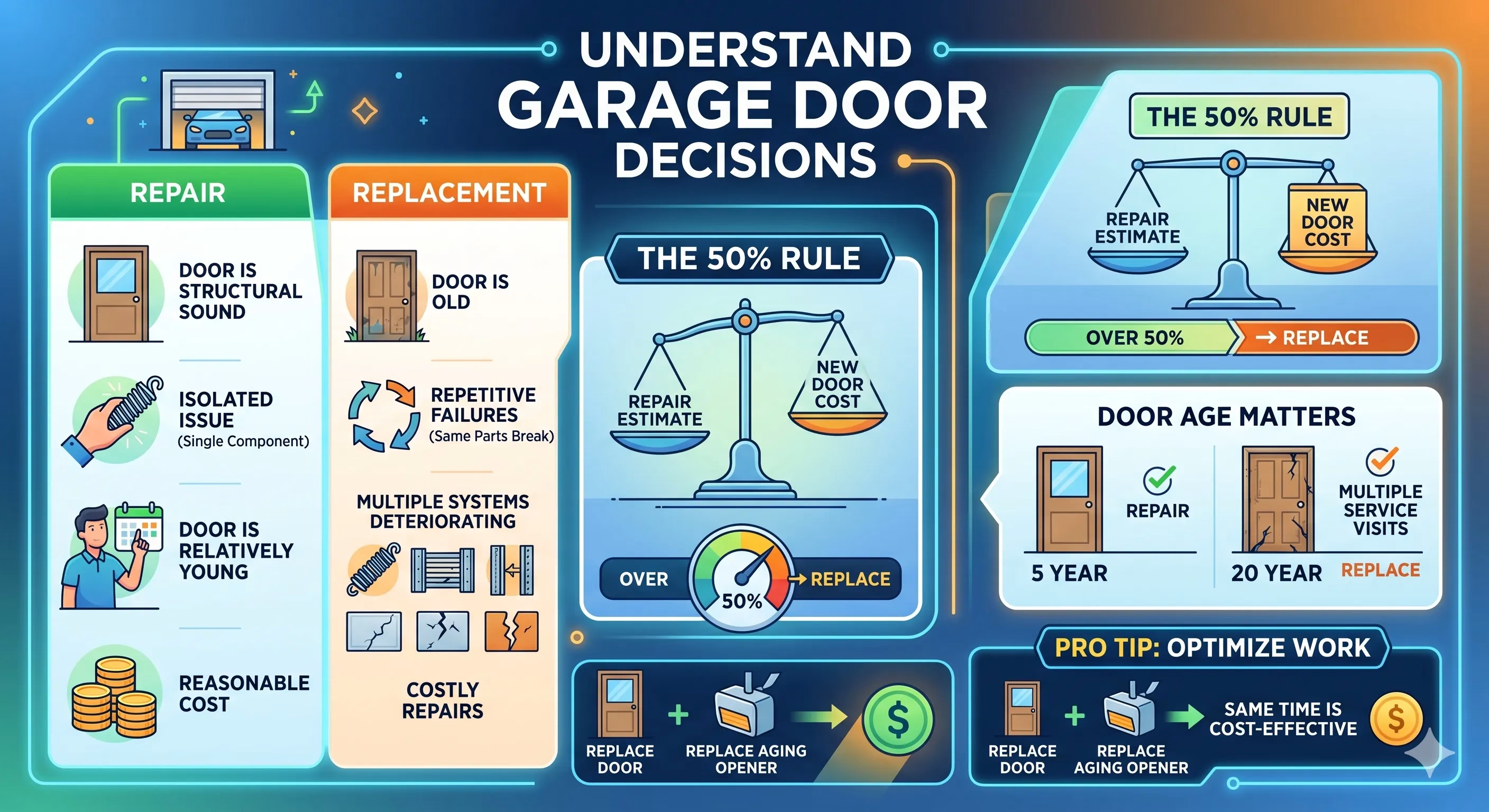
When all the individual factors are considered together, the replacement decision usually becomes clearer.
Replacement is likely the right call when:
- The door is 15 or more years old and has had multiple repairs in recent years.
- The repair estimate is 50 percent or more of the cost of a new door.
- The door has structural panel damage and replacement panels are no longer available.
- Safety mechanisms are failing and cannot be reliably restored.
- The door cannot seal properly despite repeated maintenance and seal replacements.
- Energy costs remain high and the door is a known contributor to thermal loss.
Repair is likely the right call when:
- The door is relatively young and the issue is isolated to a single component.
- The repair cost is well below the threshold of a new door investment.
- The door is structurally sound and all other components are in good condition.
- The specific failure is a known, common repair with a predictable outcome and reasonable cost.
If you are still not sure which side of the line your situation falls on, the best step is a professional inspection. For a deeper understanding of how to keep a sectional door system running well before problems develop, How to Maintain Your Sectional Garage Door Like a Pro gives you the background that makes these conversations with technicians much more productive.
The Right Time to Replace Is Before the Door Decides for You
Garage doors rarely give much warning before a significant failure. Springs break without notice, cables snap unexpectedly, and a door that was working fine on Tuesday can be completely inoperable on Wednesday morning. The homeowners who get the best outcome are the ones who make the replacement decision on their own terms, at a time they choose, with the space to compare options and select a door that genuinely fits their home and their budget.
Martin Garage Door helps homeowners throughout the Denver, CO area make confident, well-informed decisions about garage door repair and replacement. If your door is showing any of the signs covered in this guide or you simply want a professional opinion on where things stand, contact us or give us a call today and we will walk you through your options.