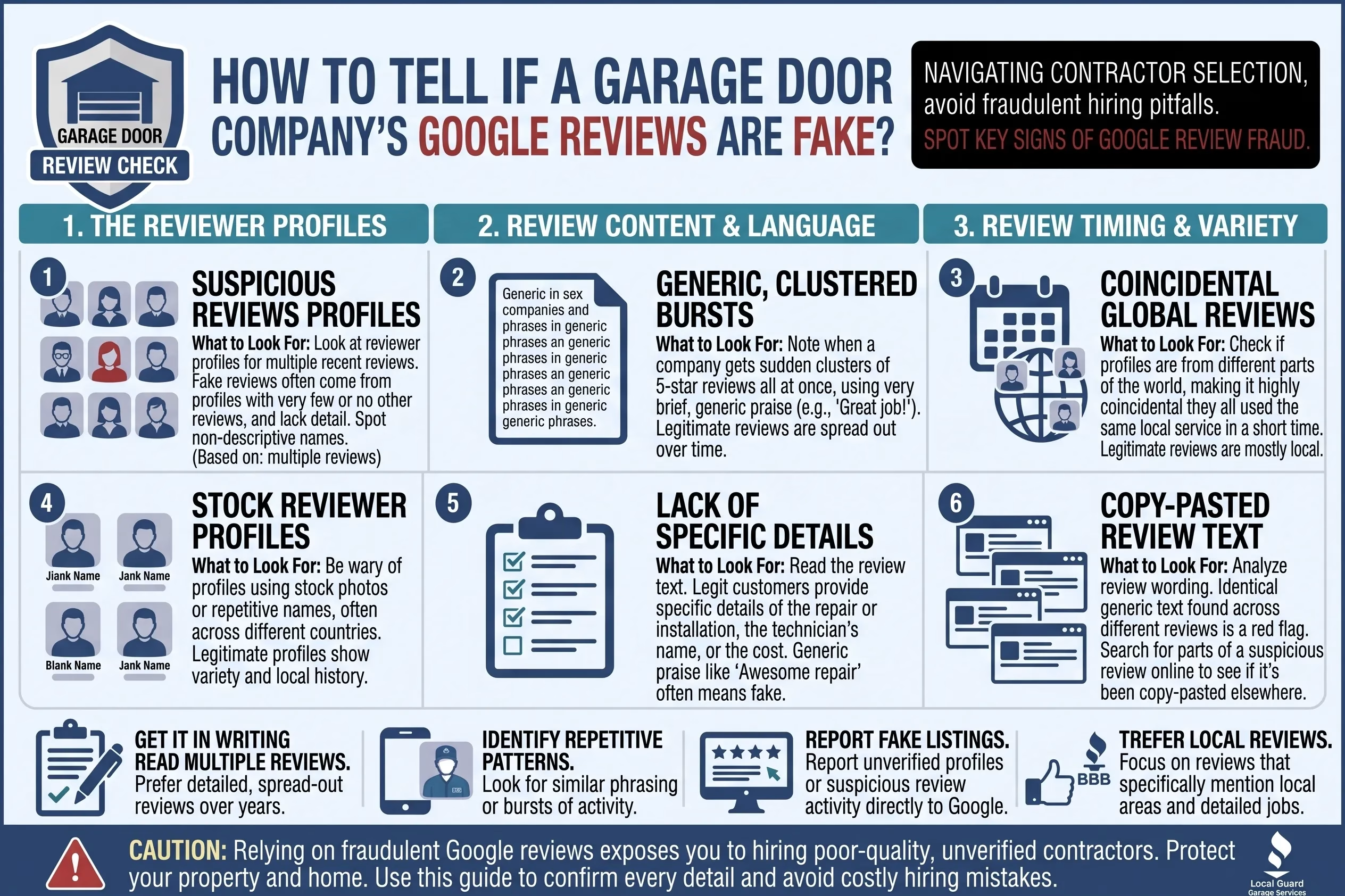
Fake Google reviews for garage door repair companies tend to show up in short bursts rather than trickling in naturally, repeat similar phrasing across multiple reviews, and come from reviewer profiles with little or no other activity on Google.
Genuine reviews are spread out over months or years, mention specific details about the actual job, and come from accounts with a normal mix of reviews across different types of businesses. If a listing’s reviews show two or more of the six patterns below, it’s worth digging further before you book a repair.
Key Takeaways
- A sudden spike of twenty or more five-star reviews in a short window is one of the clearest signs of purchased reviews.
- Repetitive phrasing across multiple reviews, like nearly identical sentences, suggests the reviews were written to a template.
- Reviewer profiles with no photo, no other reviews, and an account created recently are common markers of fake review activity.
- Genuine reviews usually mention specifics: a technician’s first name, the actual problem, or a detail about the visit.
- A listing with only five-star reviews and no three- or four-star reviews at all is statistically unusual for any service business.
- None of these signs are proof on their own. Look for two or more together before treating a listing as suspect.
Fake Review Pattern vs. Genuine Review Pattern
Signal | Fake Review Pattern | Genuine Review Pattern |
Timing | Clustered in days or weeks | Spread across months and years |
Wording | Repetitive, generic phrasing | Varied, specific to the visit |
Reviewer profile | New account, no photo, few other reviews | Established account, mixed review history |
Rating spread | Almost entirely five-star | Mix of four- and five-star, occasional lower |
Detail level | Vague praise, no specifics | Mentions technician, problem, or process |
Response pattern | Owner replies are generic or absent | Owner replies address specific feedback |
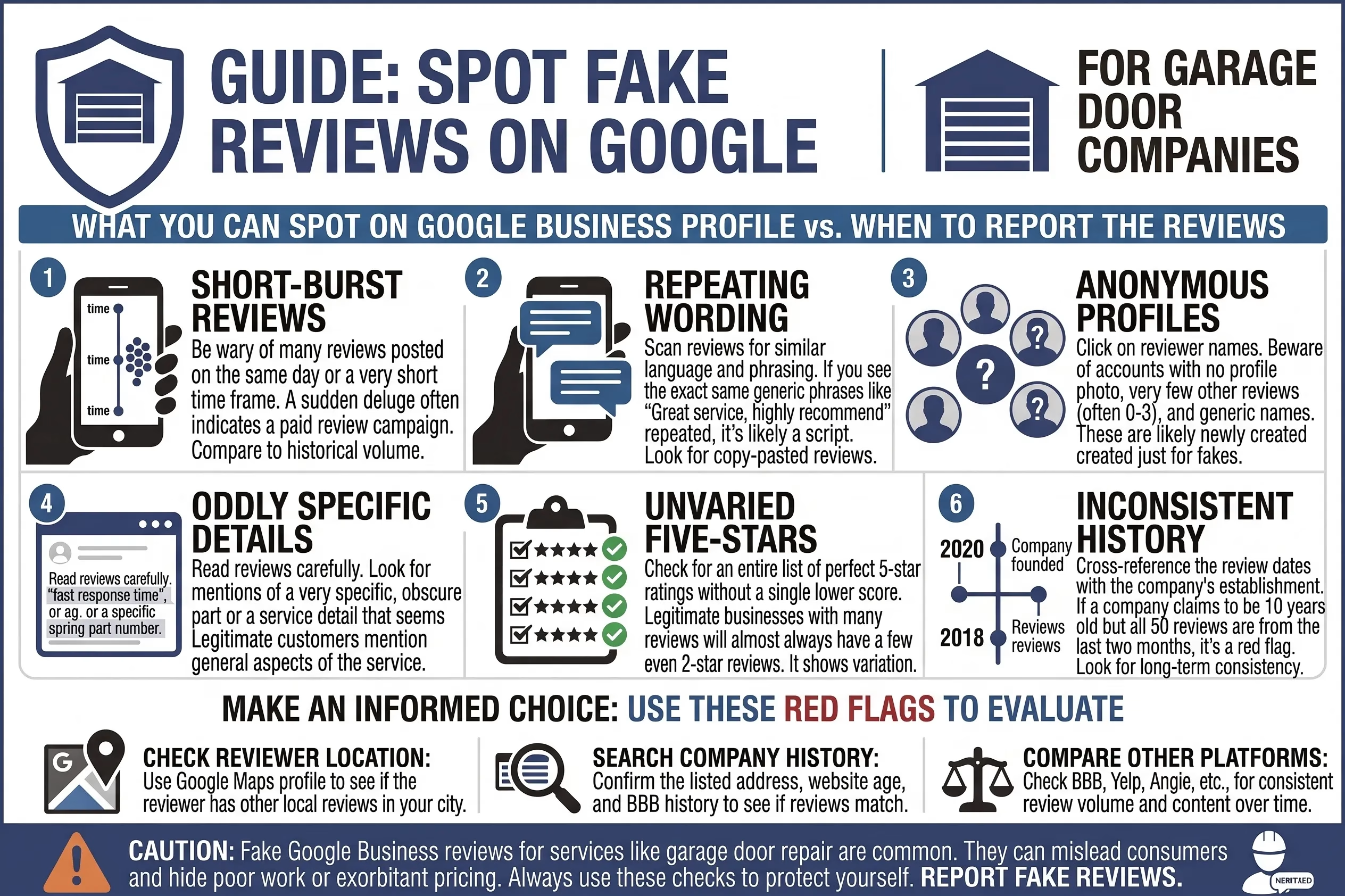
1. Reviews Arrived in a Short Burst
Genuine customer reviews build up gradually as real jobs get completed, typically a handful per month for an active local company. Fake reviews often appear in a cluster: fifteen, twenty, or more posted within days of each other, frequently right after a listing was created or rebranded. Since both are common tactics used by the same lead generation networks, this timing pattern often shows up alongside duplicate listings too.
If you want to see that pattern covered in full, read Why Are There So Many Duplicate Garage Door Repair Listings at the Same Address?
How to Check the Timing of a Garage Door Company’s Reviews
- Sort the reviews by “most recent.”
- Scroll through and note the actual dates, not just the star ratings.
- Flag any large chunk of five-star reviews that all cluster within the same short window.
- Pay extra attention if that cluster falls early in the listing’s history.
2. Review Wording Repeats Almost Word for Word
Reviews written by real customers vary naturally in tone, length, and detail because different people write differently. Purchased or template-written reviews often repeat the same phrases across multiple reviews, sometimes with only the name or date changed. This same scripted quality often shows up on the phone too.
If you want to see how that pattern plays out on calls, read Why Did My “Local” Garage Door Repair Call Get Routed to an Out-of-State Call Center?
How to Spot Repetitive Language Across Garage Door Reviews
Read five or six reviews back to back. If you notice the same phrase, like “fixed my door fast and fair price,” appearing in slightly different words across several reviews, that repetition suggests a written template rather than independent customers.
3. Reviewer Profiles Have No History or Photo
Click on the names of a handful of five-star reviewers. Genuine local reviewers, sometimes going back years. Fake reviewers usually have a mix of other reviews across restaurants, shops, and services in their area accounts often have no profile photo, joined Google recently, and have reviewed only one or two businesses total.
It’s worth checking more than one or two reviewers before drawing a conclusion, since any real business will occasionally have a customer who genuinely doesn’t review much elsewhere. The pattern that matters is when several reviewers on the same listing all share the same thin profile characteristics: no photo, a join date clustered around the same window, and no other reviews anywhere. Seeing that combination repeated across five or six different accounts on one listing is a much stronger signal than any single thin profile on its own.
How to Check if a Garage Door Reviewer’s Profile Is Real
- Tap the reviewer’s name to open their profile.
- Check for zero other reviews anywhere else on Google.
- Look for a missing profile photo.
- Compare the account’s join date against the suspicious review burst.
- Weigh these signs more heavily if several reviewers on the same listing all look the same way.
4. Every Review Mentions the Same Oddly Specific Detail
Some fake review campaigns instruct reviewers to work a specific phrase or technician name into every review for search ranking purposes. When several unrelated reviews all mention the exact same technician name, city name, or phrase in a way that feels inserted rather than natural, that’s a sign the reviews may have been written to a script.
Why Do Fake Reviews Often Repeat the Same Keyword or Name
Search engines and review platforms weigh keyword-rich reviews more heavily in local rankings, so some lead-gen operators instruct reviewers, or write the reviews themselves, to include specific terms repeatedly. Genuine customers rarely think to mention a city name in a review the way a search-optimized fake review does.
5. All Five-Star Reviews, No Variation at All
Every real service business, no matter how good, eventually has a customer who leaves a four-star review over a scheduling delay or a minor miscommunication. A listing with dozens of reviews and not a single three- or four-star review anywhere is statistically unusual and can indicate that lower ratings were filtered out or the entire review set was purchased. The International Door Association tracks these review patterns industry-wide, and covers the topic further in IDA’s LinkedIn post.
This doesn’t mean a handful of negative reviews makes a company untrustworthy. In fact, the opposite is often true. A company with mostly five-star reviews and a small number of honest four-star reviews, especially ones the owner has responded to thoughtfully, tends to read as more credible than a company with a perfect, unbroken record. Real work occasionally involves a delay, a part that takes longer to source, or a miscommunication about timing, and a healthy review history reflects that reality rather than hiding it.
Is It Normal for a Garage Door Company to Have Only Five-Star Reviews
Not typically. A healthy, established company usually shows a small number of four-star reviews mixed in among the five-star ones. An unbroken wall of five stars with no exceptions is worth treating with some skepticism.
6. Reviews Don’t Match the Company’s Actual History
If you check the oldest reviews on a listing and they reference a completely different type of business, such as moving services or towing, but the account has since been renamed and recategorized as a garage door company, the review history predates the current business entirely. This pattern, often called listing hijacking, lets a company inherit years of review credibility it never actually earned as a garage door service provider.
If you want the full picture on this tactic, read How to Spot Fake Google Business Listings for Garage Door Repair.
How to Tell if a Garage Door Listing’s Reviews Predate the Current Business
Scroll to the very oldest reviews on the listing. If early reviews describe an unrelated service, the current garage door branding is new, and the review count doesn’t reflect real garage door experience.
Trust Your Own Read, Not Just the Star Rating

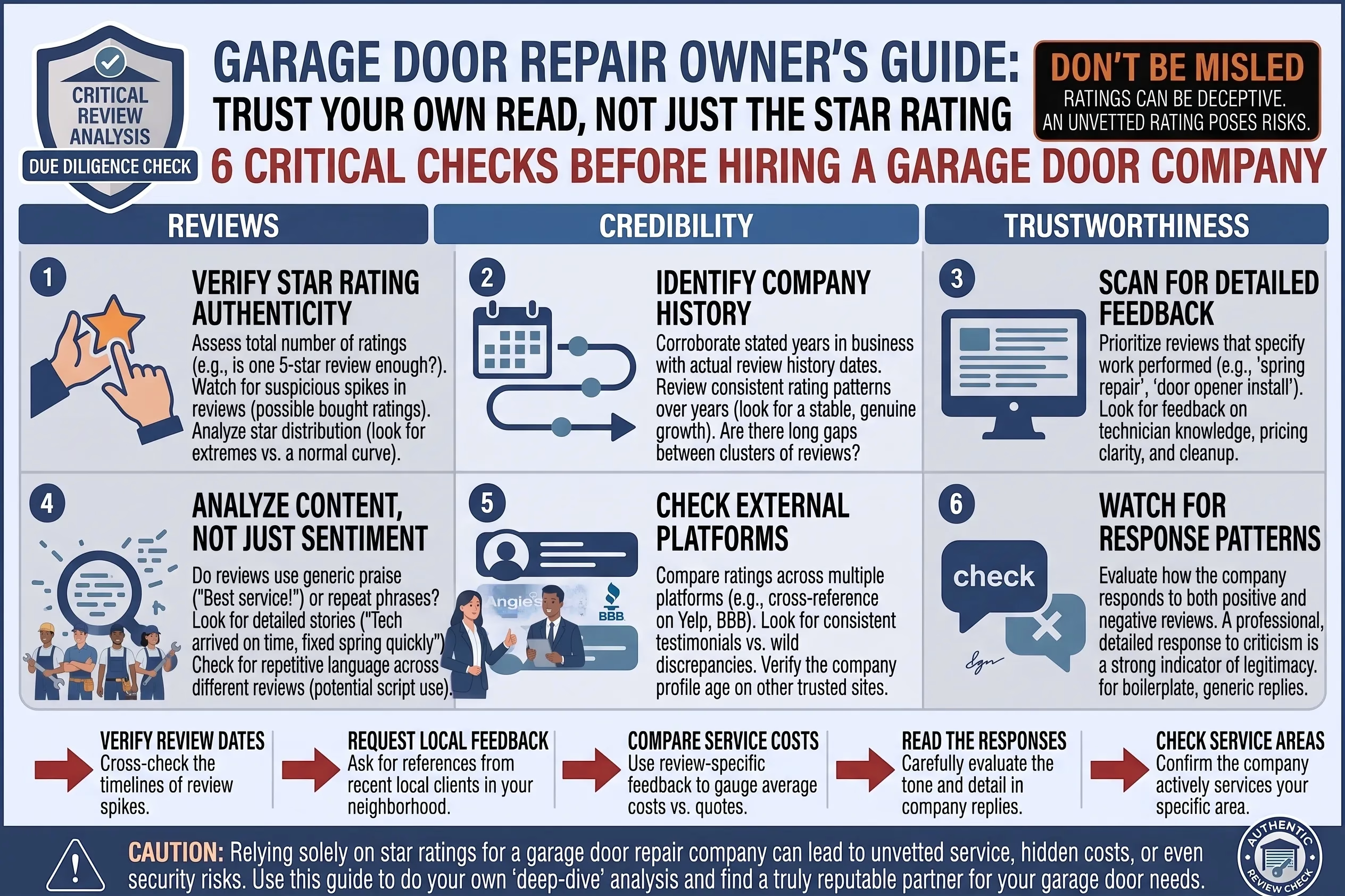
A star rating alone doesn’t tell you much. What matters more is whether the reviews, taken together, read like they were written by different real people describing different real jobs, or like they were written to check a box. If a listing’s reviews raise two or more of the six patterns above, it’s worth cross-checking the company through its own website, the Better Business Bureau, or a direct phone call before booking.
Martin Garage Door’s reviews build up the way real customer feedback should: spread out over time, specific to the actual job, and honest enough to include the occasional four-star visit. None of this means every new company with a short review history is fake, since a genuine new listing still shows normal variation in timing and wording even with few reviews, while a fake listing shows the clustering and repetition patterns above regardless of how many reviews it has. Contact us or give us a call to book.