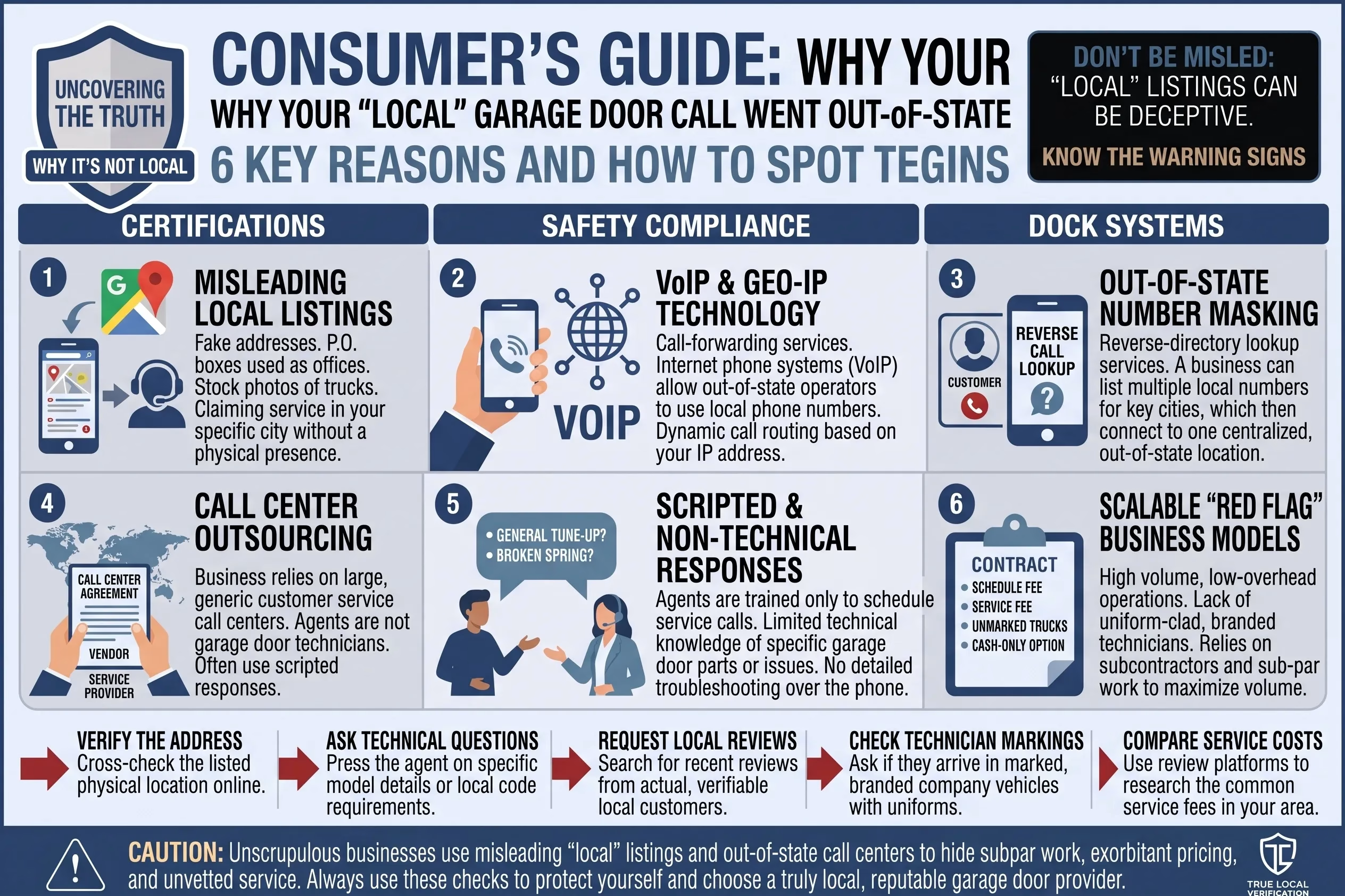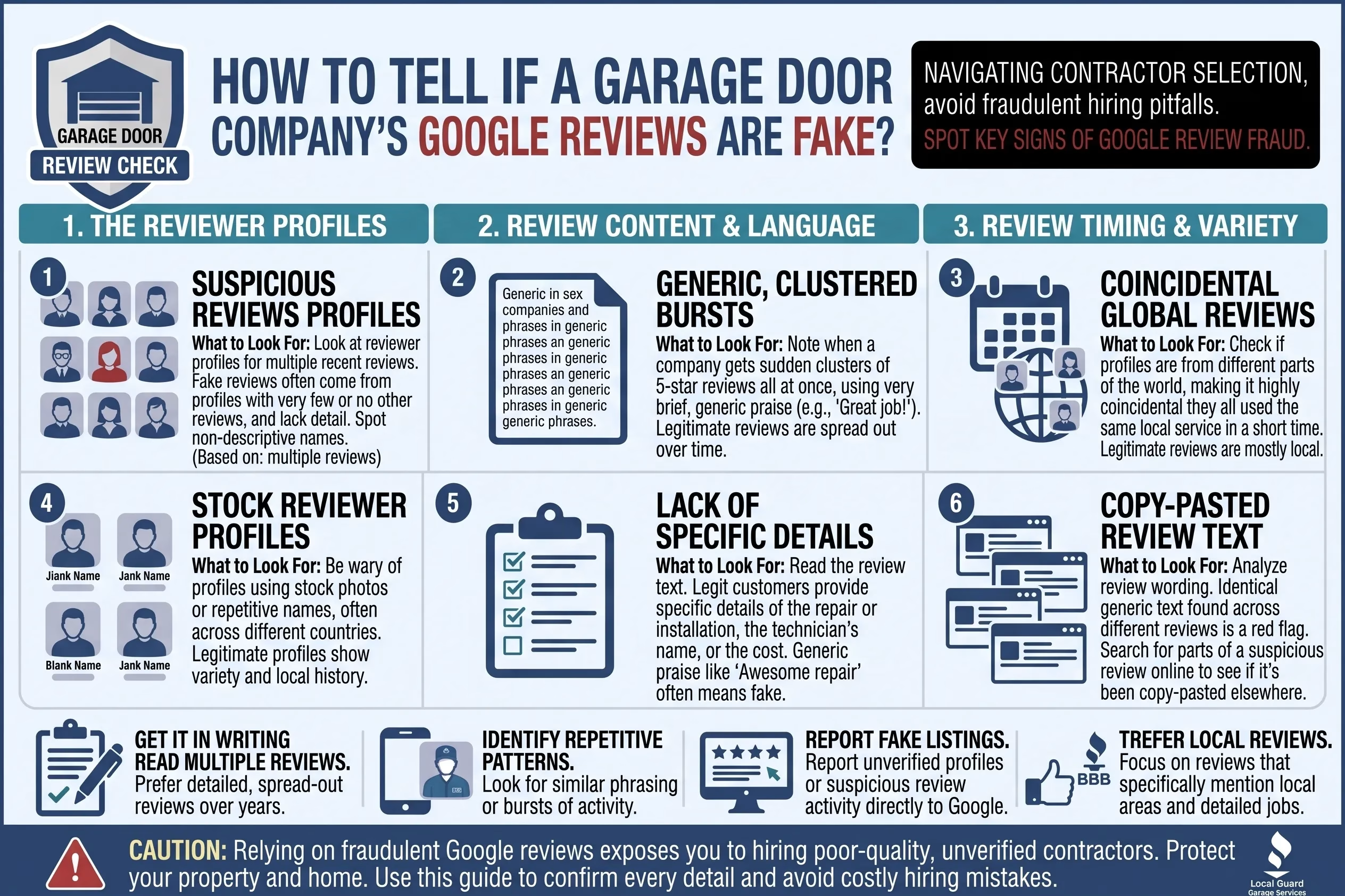
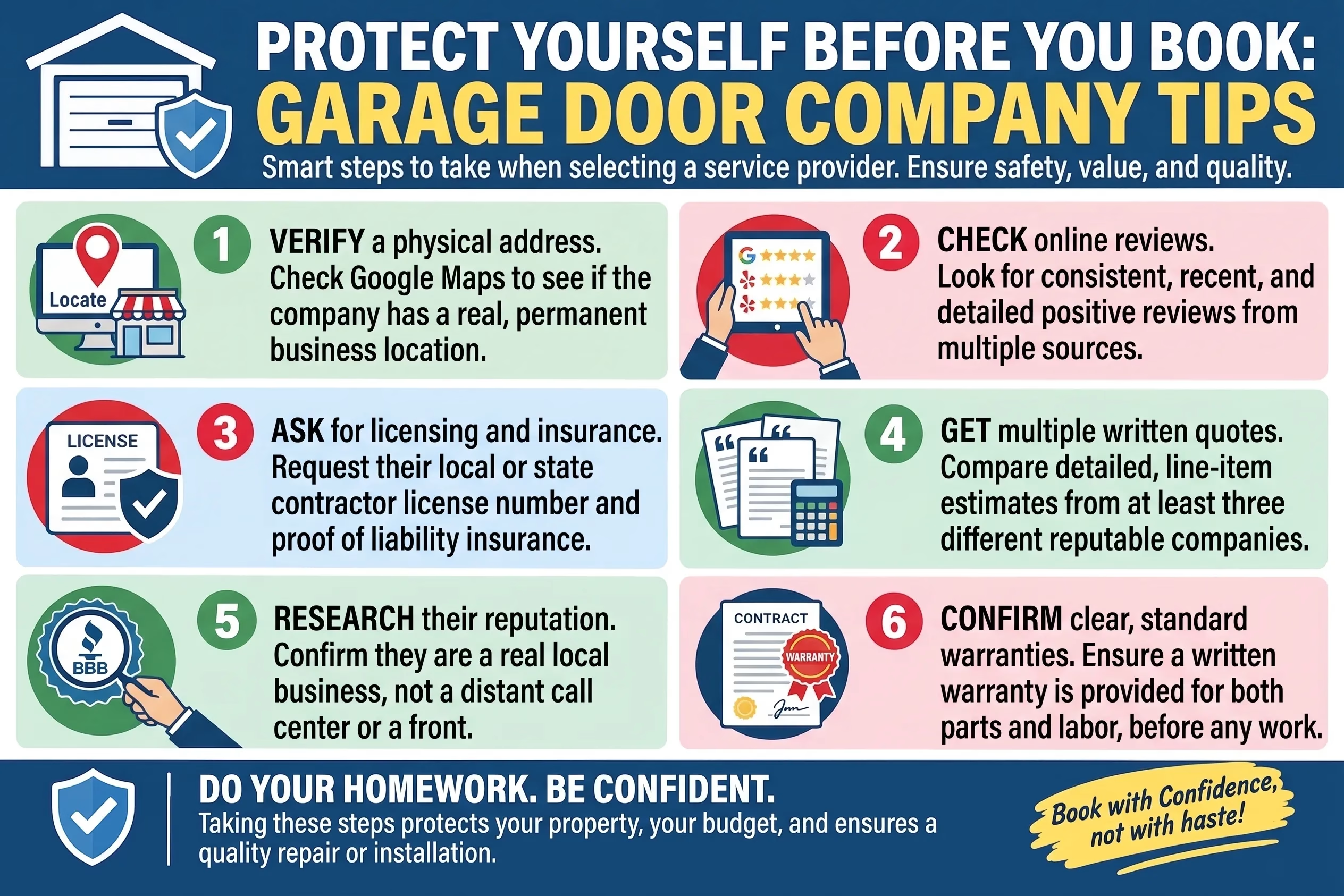
Multiple garage door repair listings sharing the same address, or an address that turns out to be a mailbox store, empty office suite, or unrelated business, is almost always a sign of a lead generation network rather than several genuine local companies. These networks register dozens of similarly named listings tied to one location or virtual address, and every call gets routed to a shared dispatch center that resells the job to whichever subcontractor is available.
This pattern shows up in nearly every major metro area, not just Denver, and it’s rarely obvious from one search result. Spotting it comes down to a few checks: confirming the physical address on a map, noticing when several “competitors” share the same generic naming style, and comparing how each one answers the phone.
Key Takeaways
- One address hosting five, ten, or more “different” garage door companies is not a coincidence. It’s a lead generation tactic.
- The shared address is often a mailbox service, coworking space, or an address that has nothing to do with garage doors at all.
- Dispatch centers behind these listings don’t employ the technician who shows up. They resell your job to a subcontractor.
- A quick satellite-view check of the address takes under a minute and catches most of these listings immediately.
- Reporting duplicate listings to Google helps clean up search results for future homeowners searching in your area.
Duplicate Listing vs. Genuine Local Competitor: Quick Comparison
Signal | Duplicate/Lead-Gen Listing | Genuine Local Competitor |
Address | Shared with several unrelated “companies” | Unique, mappable, matches their own website |
Business name | Generic, keyword-stuffed (“24/7 Denver Garage Door Pros”) | Distinct brand name with real history |
Phone answer | Generic greeting, no company name given | Answers with their actual business name |
Service fleet | Claims large fleet, address doesn’t support it | Address matches the scale of the business |
Consistency across calls | Same hold music, same scripted intake as “competitors” | Distinct process, distinct staff |
Why Lead Generation Networks Use One Address for Many Listings
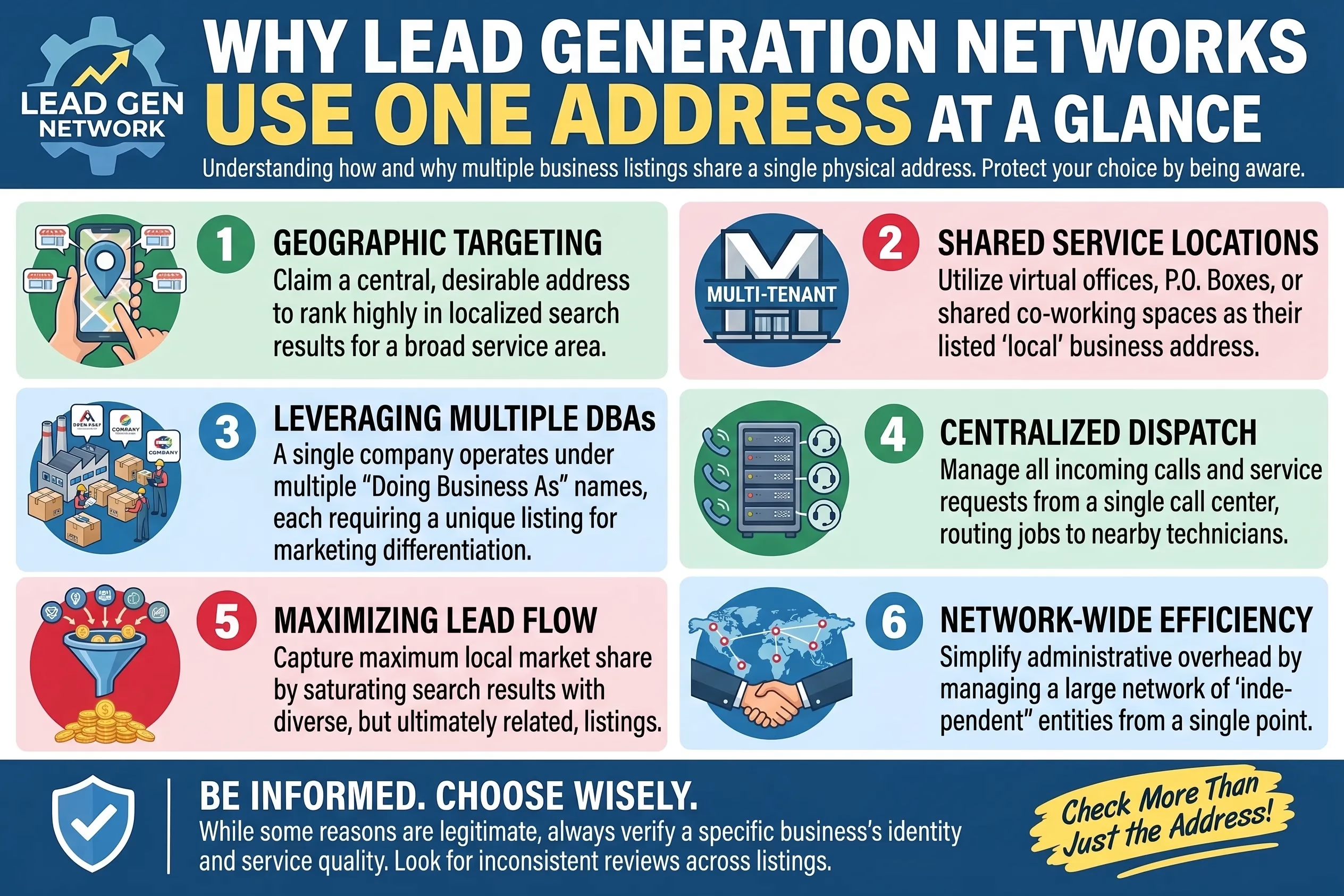
Google requires a physical address to create a Business Profile, but it doesn’t require that address to be unique to one company, and it doesn’t always verify that a listed business actually operates from that location in any meaningful way. Lead generation operators exploit this by registering many listings, sometimes named to sound like distinct local companies, all tied to a single address of convenience. That address might be a real building, but the “business” inside it is a call center or a virtual office, not a garage door repair shop with trucks and technician.
If you want to see the other nine warning signs, read How to Spot Fake Google Business Listings for Garage Door Repair.
Why the Economics Favor Lead Generation Over Real Local Service
The economics make sense from the operator’s side. Each listing that ranks for “garage door repair near me” is a lead they can sell to a subcontractor for a fee, regardless of whether the subcontractor does good work. Because the operator’s revenue comes from selling the click and the call rather than from the repair itself, there’s little incentive to limit how many listings they create at one address, or to make sure any of them reflect a real, staffed local business. Some networks operate this way across dozens of metro areas simultaneously, reusing the same playbook of virtual addresses and templated business names in each new city they target.
How to Tell if a Garage Door Listing’s Address Is a Front
- Search the exact address in quotation marks along with terms like “mailbox” or “suite.”
- Check whether the address belongs to a UPS Store or similar mailbox and executive suite service.
- Note if the same address comes up attached to several unrelated business categories.
- Treat any garage door listing at that address as unverified until proven otherwise.
How Many “Companies” Can Realistically Share One Building?
A small strip mall or office park can legitimately house a handful of unrelated small businesses. What it cannot legitimately house is eight or ten garage door repair companies, each with its own Google listing, all independently competing with each other from the same suite number. When you see that pattern, in our experience it’s a dispatch operation rather than genuine competition.
If you want to check that same operation’s review activity too, read How Can You Tell If a Garage Door Company’s Google Reviews Are Fake? 6 Signs.
Genuine competition in a local market looks different. You might see three or four separate garage door companies serving the same metro area, each with its own distinct history, its own crew, and its own shop somewhere across town. What you don’t see in a healthy market is a single building hosting an entire category of “competitors” that all somehow share one suite number, one leasing agent, and one set of amenities. That level of clustering only makes sense if the underlying business model is generating leads rather than dispatching real technicians from a real location.
Why One Address Hosting Multiple Garage Door Companies Is a Red Flag
If a satellite image or street view shows a small office suite, a shared warehouse space, or a residential building, and the Google listing claims it’s the headquarters of a company with trucks and a large service fleet, the physical reality does not match the claim. That mismatch is worth investigating before you book.
What Happens When You Call Two Different Listings at the Same Address
One of the more revealing tests you can run yourself is calling two of the “different” companies back to back. If both calls are answered with a generic greeting rather than a specific company name, if both put you through a similar scripted intake process, or if you’re placed on hold with the same music, you’re very likely talking to the same call center twice.
If you want to go deeper into this exact pattern, read Why Did My “Local” Garage Door Repair Call Get Routed to an Out-of-State Call Center?
This test works because a real local competitor has no reason to sound like its rivals. Two genuinely separate garage door companies in the same city will typically have different hold music, different intake scripts, and different staff voices, simply because they’re run independently. When two “competitors” sound identical down to the phrasing of their scripted questions, that similarity is a stronger signal than almost anything else you can check by phone alone.
How to Confirm Two Garage Door Listings Are Actually the Same Operation
- Call both listings and ask, “Can you tell me the name of the technician’s employer and where the truck is coming from?”
- Write down each answer so you can compare wording, not just impressions.
- Listen for identical hold music, scripted phrasing, or a rep who slips and mentions the other company’s name.
- Treat vague or inconsistent answers from both calls as confirmation they’re connected.
How to Report Duplicate or Fake Garage Door Listings to Google
If you identify a cluster of duplicate listings, it’s worth reporting them through more than one channel. No single report fixes your immediate repair, but consistent reporting from multiple homeowners does make a measurable difference in how quickly spam clusters get cleaned up.
- Google: Flag the Business Profile as fake, closed, or a duplicate through the “Suggest an edit” option on the listing itself.
- Cross-check for fake reviews: Pair this check with a look at whether that listing’s reviews seem genuine, since duplicate listings and fake reviews often show up on the same profile.
- Industry tracking: The International Door Association collects consumer reports of garage door scams nationally through its own scam-reporting form, separate from Google, and covers the topic further in IDA’s LinkedIn post.
How to Flag a Fake Garage Door Business Listing on Google Maps
- Open the listing on Google Maps or Search.
- Select “Suggest an edit.”
- Choose the option indicating the business doesn’t exist at this location or appears to be a duplicate.
- Submit the report and expect it to take time before any action becomes visible, since Google reviews these manually.
Don’t Let a Shared Address Fool You
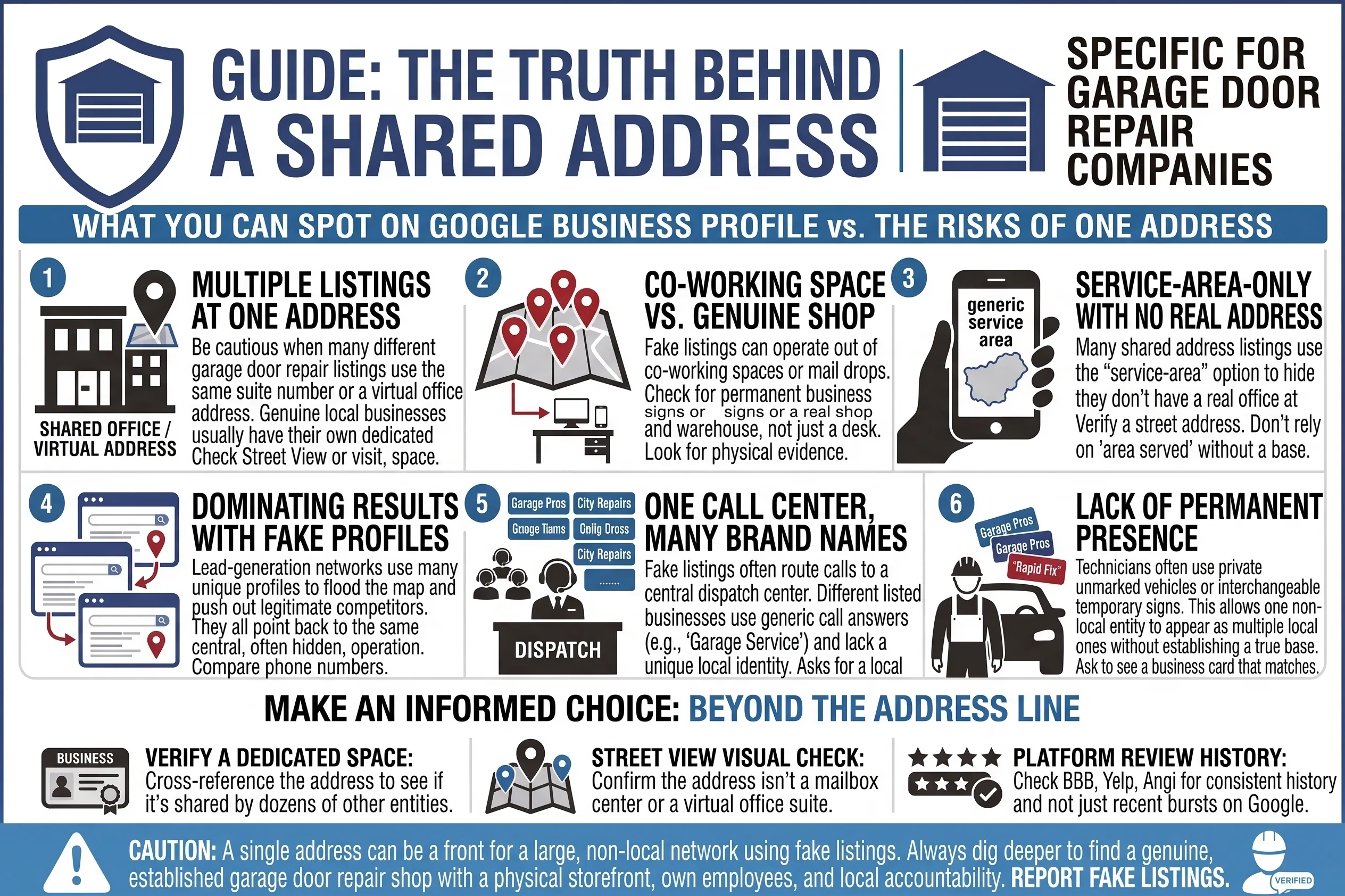
Seeing several garage door repair listings clustered at one address is one of the clearest signs you’re looking at a lead generation network rather than real local competition. A minute or two spent checking the address on satellite view, or a quick pair of test calls, usually confirms it either way. Once you’ve ruled out the duplicates, it’s worth going back to our full guide on spotting fake Google Business listings to check for the other warning signs before you book.
Martin Garage Door operates from one address in Parker, CO, not a rotating cast of listings, and our technicians can tell you exactly who is coming to your door and when, before you ever agree to a visit. If you’d like to book, contact us or give us a call to verify; we’re glad to help.