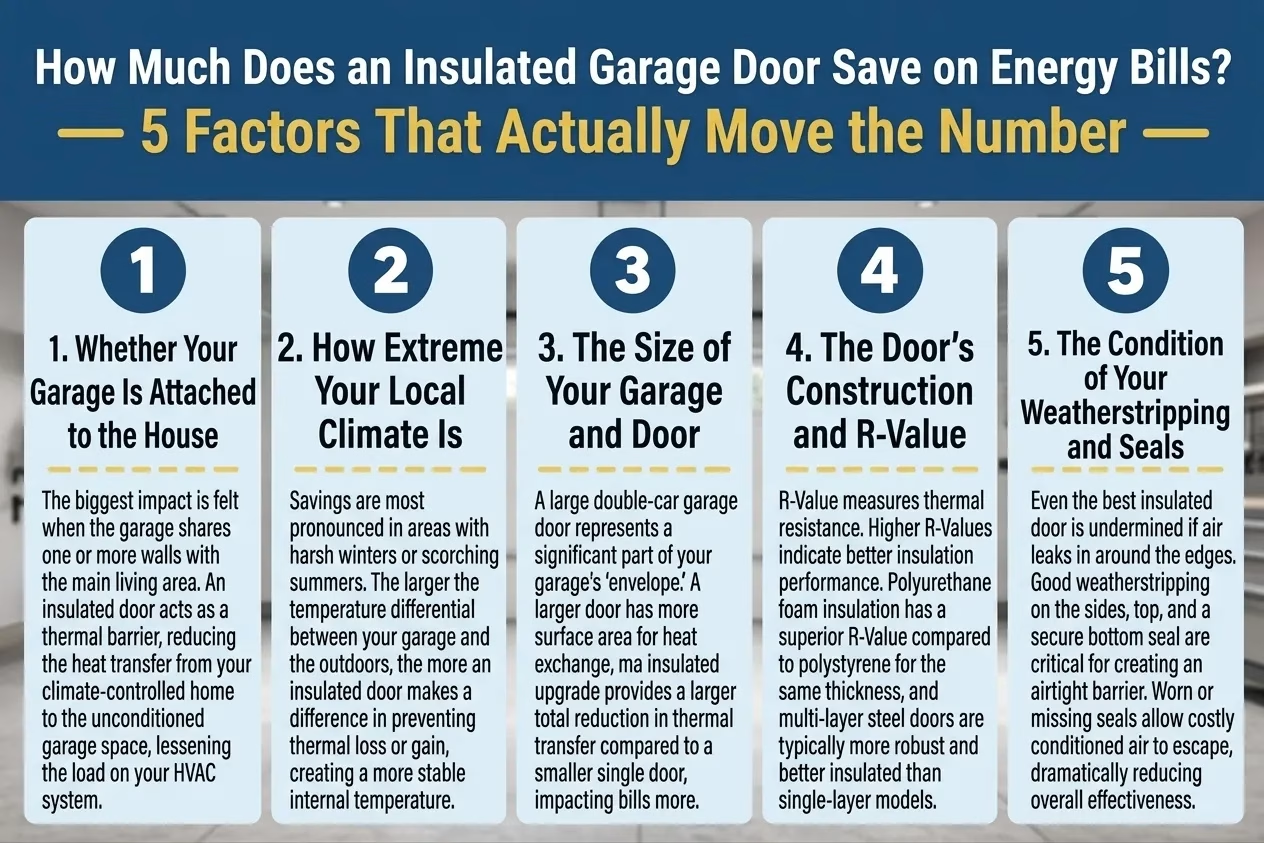
Yes, an insulated garage door can lower your energy bills, but there’s no single number that applies to every home. The actual savings depend on five factors: whether your garage is attached to the house, how extreme your climate is, the size of your garage and door, the door’s construction and R-value, and the condition of your weatherstripping. An attached garage in a hot or cold climate sees the clearest difference. A detached garage in a mild climate should expect a smaller one. Here’s how each factor moves the number.
Key Takeaways
- There’s no universal dollar figure. Savings depend on your specific garage, climate, and door.
- An attached garage sees the clearest benefit, since it shares walls with living space.
- Climate severity moves the number more than almost any other single factor.
- Door construction (single, double, or triple-layer) and R-value determine how much heat transfer is actually being stopped.
- Worn or missing weatherstripping can undercut even a well-insulated, high R-value door.
Which Factors Move the Number Most
Before getting into each factor individually, here’s how they stack up against each other at a glance.
Factor | Impact on Savings | Why |
Attached vs. detached garage | High | Only an attached garage shares walls with conditioned living space |
Climate severity | High | Bigger temperature gaps mean more heat transfer to stop |
Garage and door size | Medium | More surface area means more potential heat loss to prevent |
Door construction and R-value | Medium | Determines how much of that heat transfer is actually blocked |
Weatherstripping condition | Medium to High | Gaps and worn seals can undo the benefit of the door itself |
1. Whether Your Garage Is Attached to the House
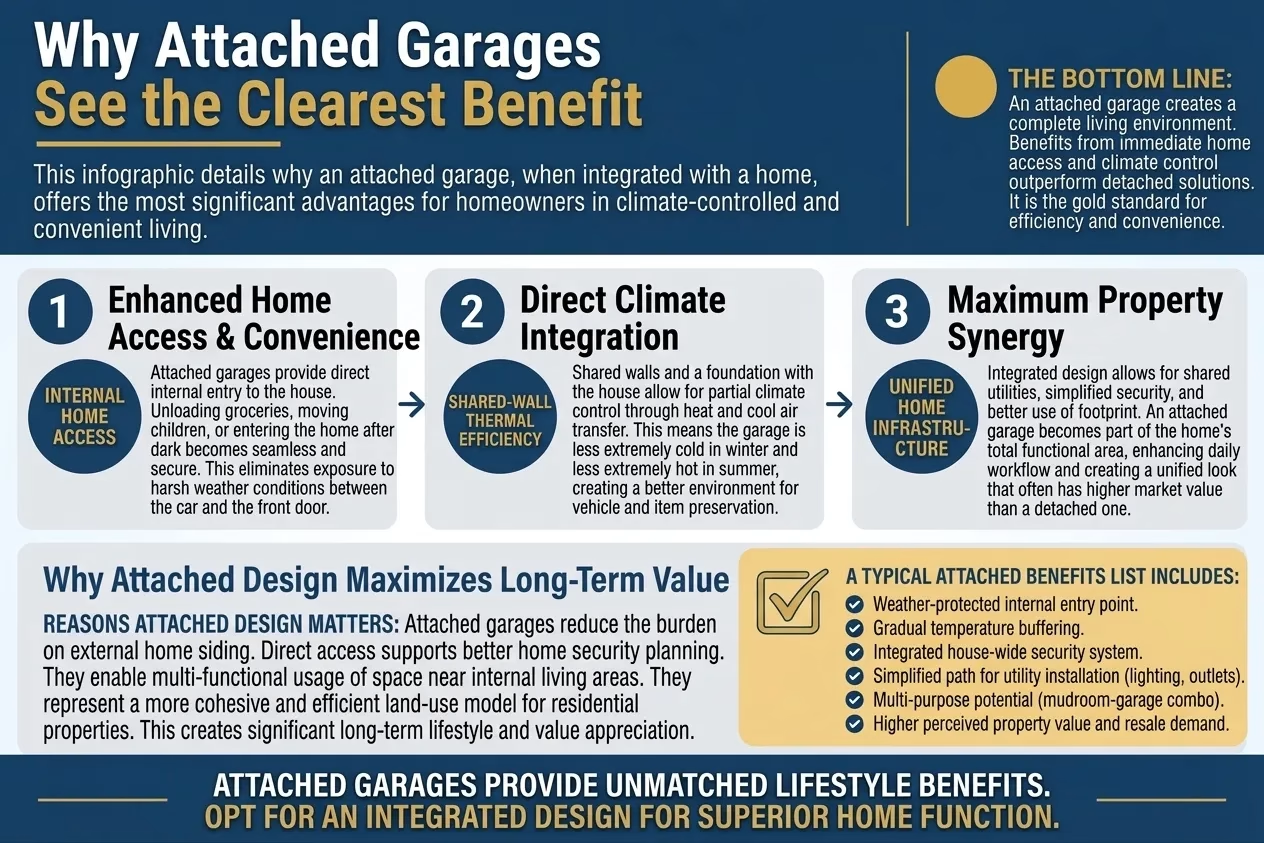
This is the single biggest factor, because it determines whether there’s any living space for the insulation to actually protect.
Why Attached Garages See the Clearest Benefit
An attached garage shares at least one wall, and sometimes a ceiling, with a room you actually heat and cool. An uninsulated door lets that garage swing closer to outdoor temperature, and that temperature swing pulls heat or cooling out of the adjacent room through the shared wall. The HVAC system on the other side of that wall then has to work harder to compensate, which is where the actual dollars leak out.
What This Means for Detached Garages
- A detached garage has no shared wall with living space, so there’s no adjacent room for the insulation to protect
- The energy argument narrows to the garage itself, not the rest of the house
- Noise reduction and durability benefits still apply, just not the utility-bill benefit
That doesn’t mean insulation is pointless in a detached garage; it just means the case for it rests on comfort and durability rather than a lower electric bill. For the bigger picture on whether insulation is worth it overall, see the guide, Does an Insulated Garage Door Actually Help? 7 Real Benefits (and When It’s Not Worth It).
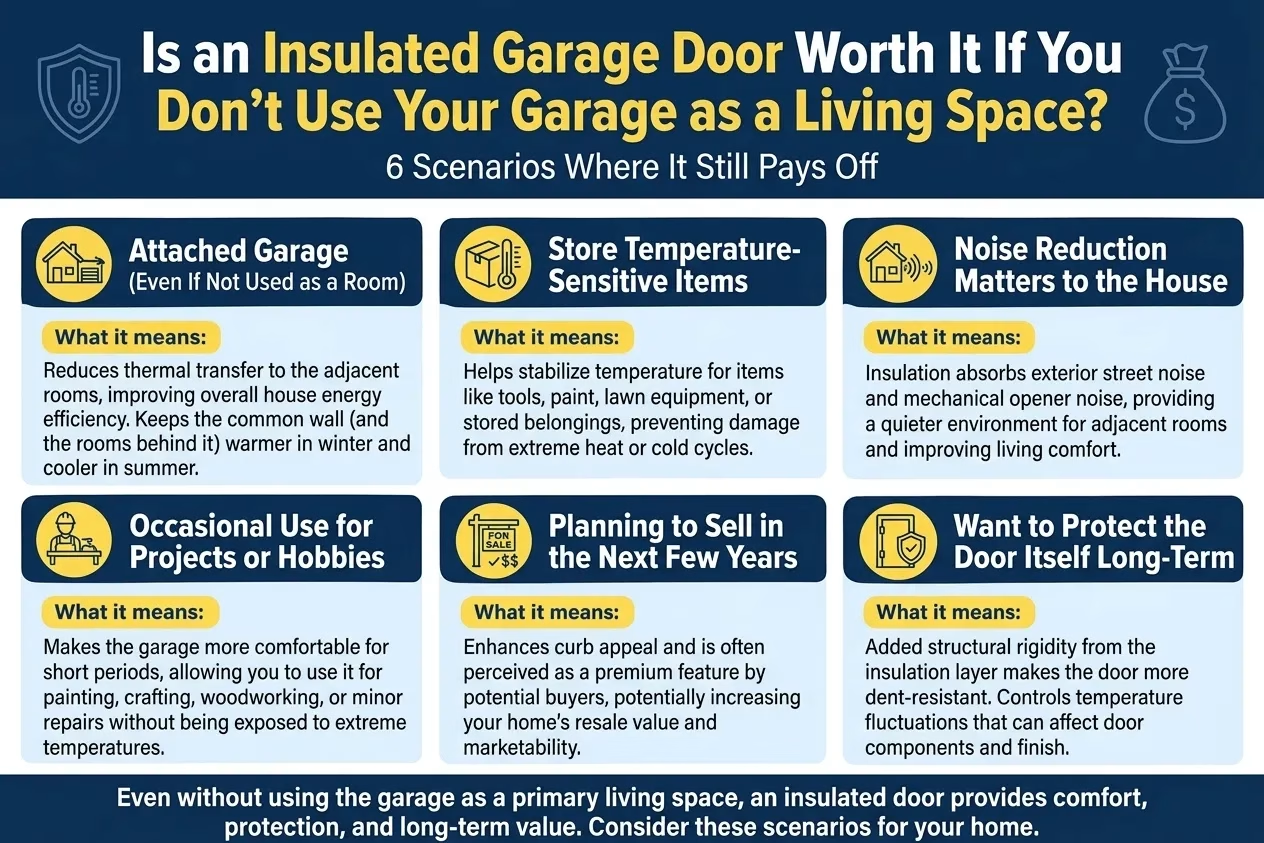
If your garage is detached or you mainly use it for parking, Is an Insulated Garage Door Worth It If You Don’t Use Your Garage as a Living Space? 6 Scenarios Where It Still Pays Off walks through when it’s worth it anyway.
2. How Extreme Your Local Climate Is
Climate severity moves the number more than almost any other single factor on this list.
Why Bigger Temperature Swings Mean Bigger Savings
The savings come from narrowing the gap between garage temperature and outdoor temperature. In a climate with hot summers or cold winters, that gap is large, so there’s more for insulation to work against. In a mild climate, the gap is already small, so there’s less for the door to fix. This is why the same door, installed on two identical houses in two different climates, can produce noticeably different results.
Where the Difference Shows Up Most
- Regions with long, hot summers and high AC use
- Regions with cold winters and high heating use
- Homes where the garage-adjacent room already runs noticeably hot or cold
- Homes in consistently mild climates, where the difference is smaller either way
If your local weather rarely swings to either extreme, it’s worth weighing insulation against other upgrades that might move the needle more for your specific climate.
3. The Size of Your Garage and Door
Bigger openings mean more surface area, and more surface area means more heat transfer to prevent in the first place.
Why a Two-Car Garage Sees More Impact Than a Single-Car Garage
A wide, two-car door has significantly more surface area exposed to the outside than a single-car door. That means an uninsulated two-car door has more potential heat loss to begin with, and an insulated one has more to gain by comparison. It also means the upfront cost is higher, so the relative payoff timeline can look different even when the percentage improvement is similar.
How Garage Size Factors In Beyond the Door
- A larger garage volume takes longer to swing with outdoor temperature, which can soften the effect either way
- More wall area shared with living space amplifies the benefit of insulating the door
- A garage with a room directly above it adds a second surface for temperature transfer, not just the shared wall
4. The Door’s Construction and R-Value
This is where the door itself, not just the garage, starts to matter.
How Construction Type Changes the Real-World Result
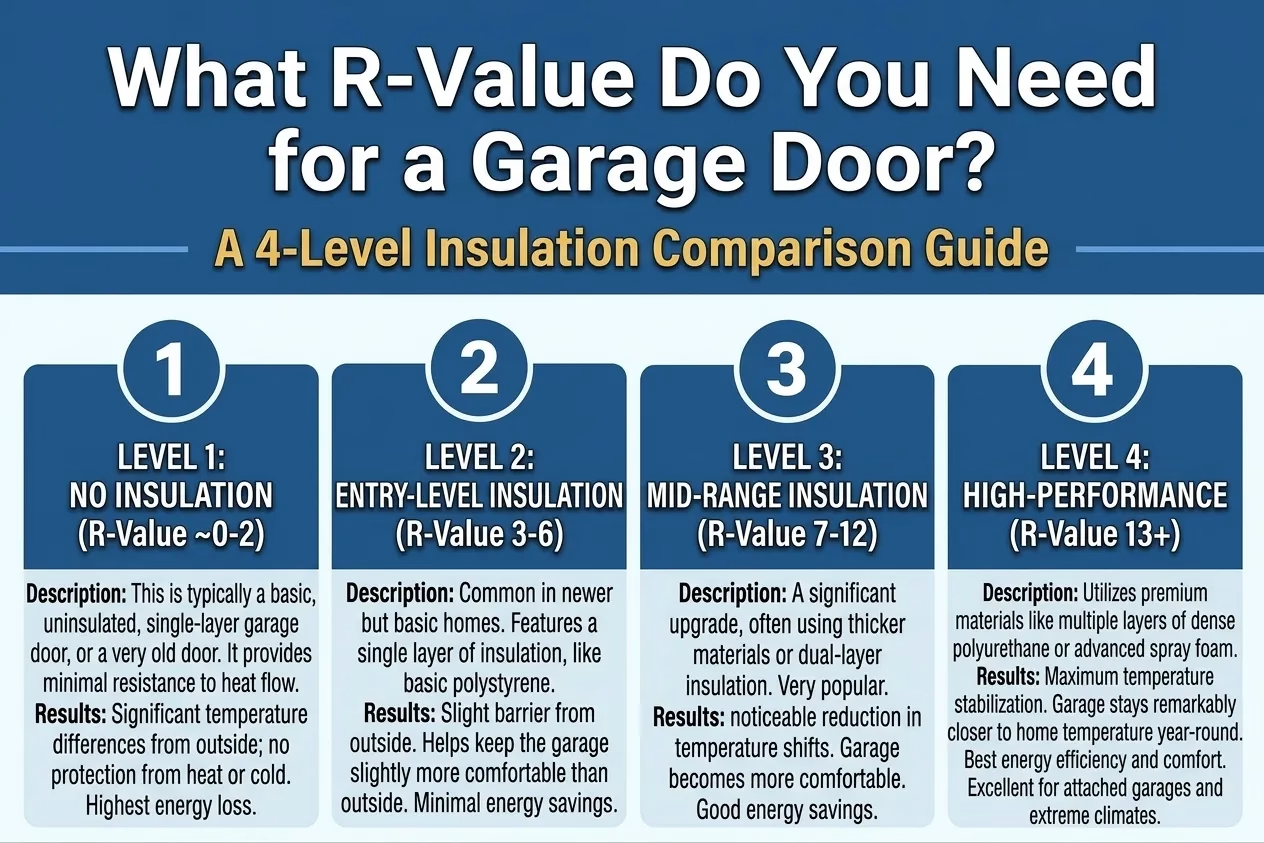
A single-layer door has no foam core and essentially no meaningful R-value. A double-layer door adds one foam core between two skins. A triple-layer door sandwiches foam between steel on both sides with a finished interior.
Each step up generally improves both R-value and how tightly the door seals, though a well-built double-layer door can still outperform a poorly sealed triple-layer one. The jump from single to double layer tends to make the biggest practical difference, since that’s where a foam core is introduced at all. For the full 4-level comparison, read What R-Value Do You Need for a Garage Door? A 4-Level Insulation Comparison Guide.
Why R-Value Alone Doesn’t Guarantee the Savings
- R-value measures the insulating material, not the whole installed door
- A high R-value door with poor edge seals can underperform a moderate R-value door with a tight seal
- Manufacturers vary in how they test and report R-value, so numbers aren’t always apples to apples across brands
For a look at why sealing and insulating pays off at the whole-home level too, see ENERGY STAR’s Why Seal and Insulate?.
5. The Condition of Your Weatherstripping and Seals
Even the best-insulated door won’t perform well if air is leaking around it.
Why Seals Matter as Much as the Door Itself
Weatherstripping around the sides and top, plus the bottom seal, is what stops air from moving around the door rather than through it. A gap here lets outside air bypass the insulation entirely, which undercuts the door’s rated performance in the real world. This is also the cheapest of the five factors to fix, so it’s worth checking before assuming a full door replacement is necessary.
Signs Your Seals Are Undercutting Your Door’s Performance
- Visible daylight or drafts around the edges when the door is closed
- A bottom seal that’s cracked, flattened, or no longer makes full contact with the floor
- Noticeably more noise or temperature change than expected for the door’s rating
- A door that’s more than 10 to 15 years old, when seals are more likely to have degraded
A quick visual check of all four sides takes a few minutes and can save you from paying for an insulation upgrade that a worn seal would have undermined anyway. For a broader look at how different door types and materials handle insulation and sealing, Family Handyman’s guide to garage door types covers the tradeoffs across styles.
What This Actually Means for Your Energy Bill
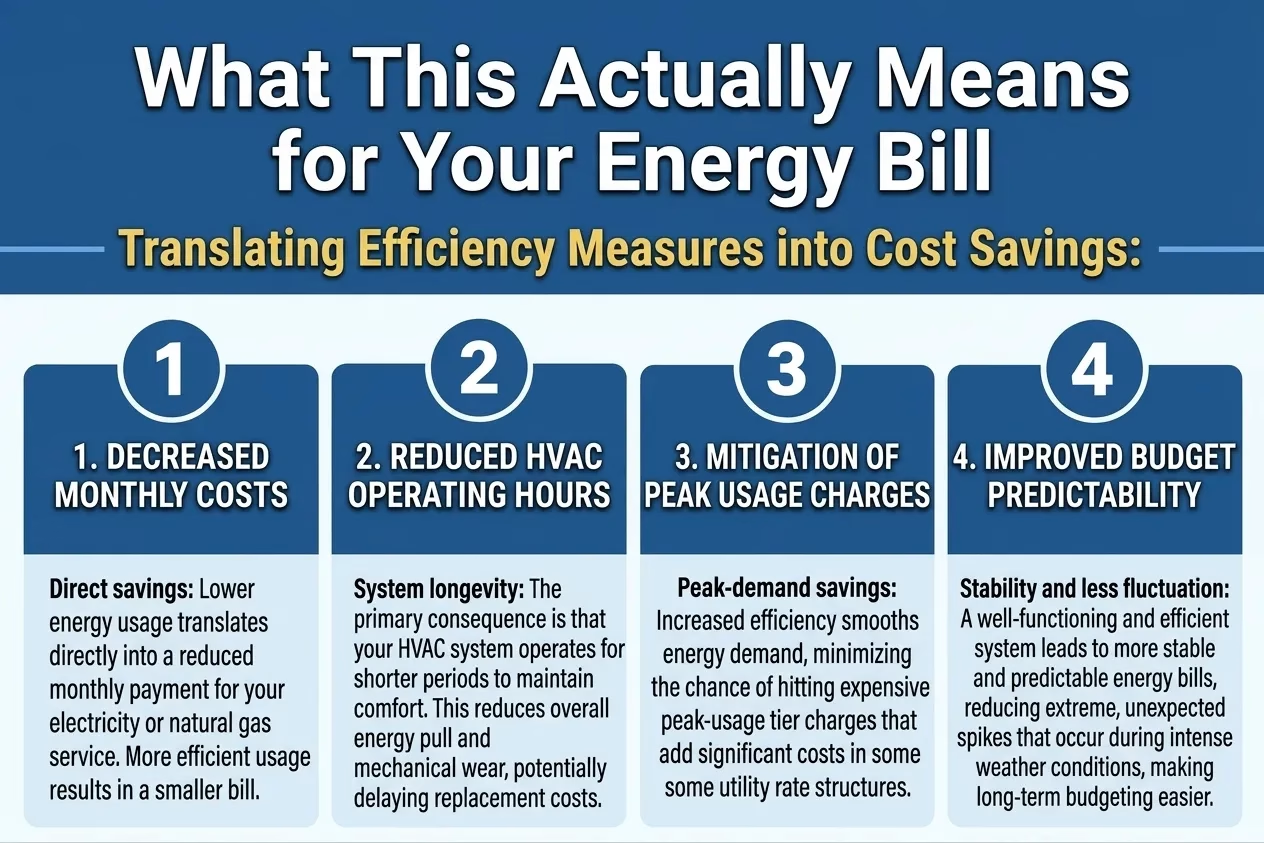
There’s no honest way to promise an exact number without seeing your specific garage, climate, and door. What’s fair to say is that the biggest wins come from stacking the factors: an attached garage, in a climate with real temperature swings, with a well-sealed, properly rated door. Any one of those factors missing shrinks the benefit; several missing can make the upgrade more about comfort and noise than about the utility bill. Homeowners who see the clearest results tend to be the ones addressing all five factors together rather than fixating on R-value alone.
If you want a straight read on where your setup falls, Martin Garage Doors can walk your garage through these five factors and give you an honest answer, not just a sales pitch. Contact us or give us a call for a free assessment.